

Four days ago, I had the strange pleasure of eating the worst risotto of my life. While a love of all things rice is my birthright, an almost deifying experience of the classic Italian rice dish came in my twenties. To say my first experience was a revelation is not an exaggeration – it was comfort, love, familiarity, and nourishment all in one.
Because of a single altering of perception, it would be unfair to judge all risottos after against it. Instead, I take the median of my enjoyment, and most, if not all subsequent risottos met this standard. That is, until four days ago.
To say this particular rendition tasted bad would not be accurate. After all, it had the primary ingredient to construct risotto: rice. The dish’s main felony can only be described as absolute blandness that no amount of salt could rescue.
If I ordered this risotto at a hospital, where blandness is expected, if not part of a patient’s dietary requirement, it would have been fine. I would have dismissed it as an industrial necessity. However, I was at a well-known, well-regarded restaurant in Boulder, Colorado, where this particular catastrophe was served with a perfectly cooked duck breast. The duck’s skin was as crisp as a bright, winter morning, and beneath that was pink, puffy melted heaven. So, I expected the duck’s ricey partner to rise to the occasion. It did not.
The only pleasure I received from the risotto was the amount of contemplation it generated. What is risotto? What is the bare minimum one needs to make it a passable dish?
Some would argue it’s the quality of the ingredients; others, it’s the time slaving over a stove, slowly stirring in stock to gently coax starches from the bonds of riciness. I have counter-experiences to both of these assertions. I’ve had excellent, creamy risotto made with inexpensive, easily accessible Aborio as I’ve had with aged, bone dry carnaroli. I’ve also made a fine version in 20 minutes in a pressure cooker as if I stirred for an hour.
After much thought, I have concluded in order to make a cohesive risotto with very little effort: 1) extract as much flavor from your aromatics as possible, and 2) make all other ingredients reflect and reinforce risotto’s main theme: comfort.
Aromatics
For the uninitiated, aromatics include onions, celery, carrots, and garlic. When cooked together, they form the first flavor layer for a soup, broth or stock. Risotto’s magic trick is flavor absorption. As the rice cooks, it takes the flavors from the stock and transforms them into cream. This means the liquid used to cook the rice must be flavorful.
The Worst Risotto’s aromatics held much flavor promise: onions and fennel. The result of the cook’s treatment of their aromatics that evening was the opposite of flavor extraction and integration. My guess is they steamed the onions and fennel separately and mixed it into the risotto at the last minute. The rice showed no hint of fennel’s delightful anise, and no sign of the sugars in the onions when you sauté them. Meant to form the foundation where other players can shine, the aromatics in the Worst Risotto were cast as nearly invisible background extras, forced to silently watch as the rice died on stage.
Risotto = Comfort
To my second point, any other ingredients must support risotto’s thesis statement: I represent comfort. The Worst Risotto’s addition was Patty Pan squash. Much like the aromatics, the squash seemed to be added without a moment’s thought of what squash delivers: roasted, earthly sweetness. Sliced into uninspired half moon shapes, in slightly more careful hands, the squash could have elevated this risotto into a wonderful, late autumn, post-Thanksgiving dish.
To salvage this experience from my memory, and to truly understand what makes a risotto delicious, I decided to put my two theories above to the test. Using easily accessible ingredients, store bought low sodium chicken stock, and a pressure cooker, the recipe below makes a very passable risotto. Without a ton of hassle or money, you too can make a better risotto than the one I experienced at a fancy restaurant (duck breast optional).
Fennel and Green Acorn Squash Risotto
Ingredients
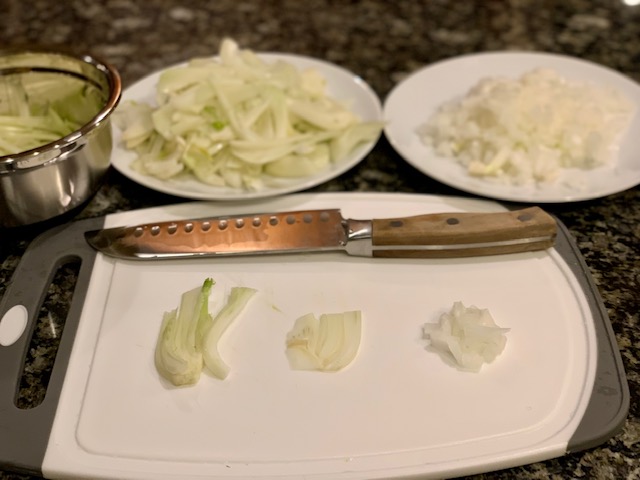
- 1 medium sized green acorn squash, halved and seeded (see procedure)
- 1/2 diced sweet or yellow onion (yield: 1 1/2 cups)
- 1 medium fennel bulb, tops removed and saved for extra credit, bulb sliced and halved once more
- 4 cups low sodium chicken stock or broth
- 2 Tb unsalted butter
- 1 Tb olive oil
- 2 cups Aborio rice
- 1/2 cup grated parmesan cheese (freshly grated, if possible)
- 1/2 tsp salt
- 1/8 tsp pepper
Extra credit ingredients
- 1/2 cup fennel tops with most of the fronds removed, chopped
- 1/2 cup sliced fennel bulb
Procedure
Green Acorn Squash
While this specifically describes how to roast Green Acorn Squash, this method can be used with any other seeded squashes (e.g. Butternut squash).
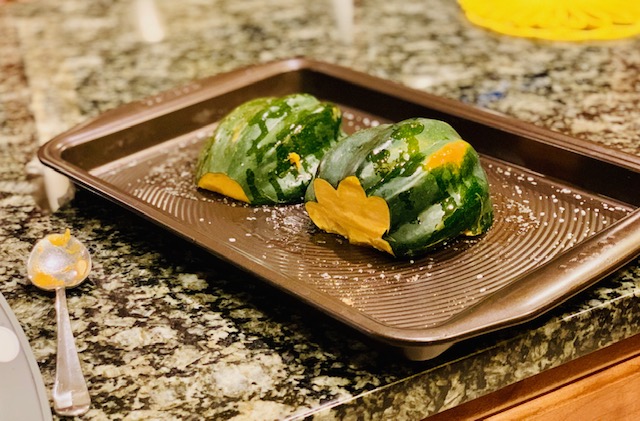
- Preheat the oven to 375 degrees Fahrenheit
- Slice the ends from the green acorn squash then cut in half longways
- Remove the seeds with a spoon
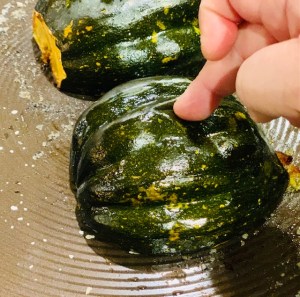
4. Place flesh side down on a baking sheet and cook in the oven until the skin can be pressed down easily (about 35-45 minutes)
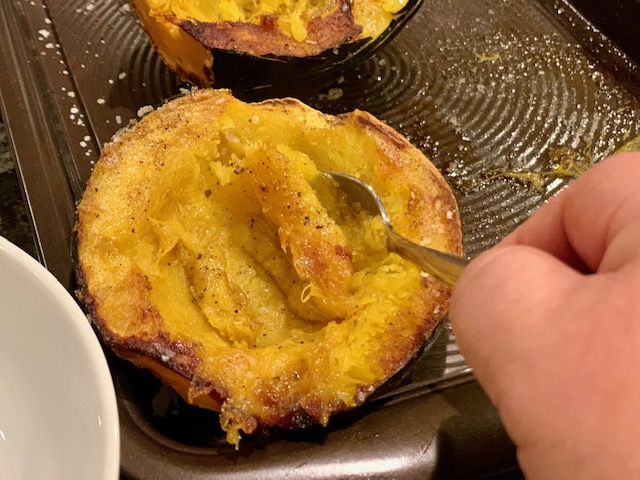
5. Cool slightly then remove the insides with a spoon
6. Set aside.
Extra Credit #1: Fennel-Scented Broth
Fennel, when cooked, is barely like it is when raw. If you’ve ever taken a bite of raw fennel, you would have immediately noticed its strong anise (black licorice) flavor. The most amazing thing about aromatics (think onions) is how they transform when cooked. The sharp claws in your taste buds anise of raw fennel turns into a subtle, purring kitten flavor that you will want more of. Take on this extra credit challenge and you’ll be happily rewarded.
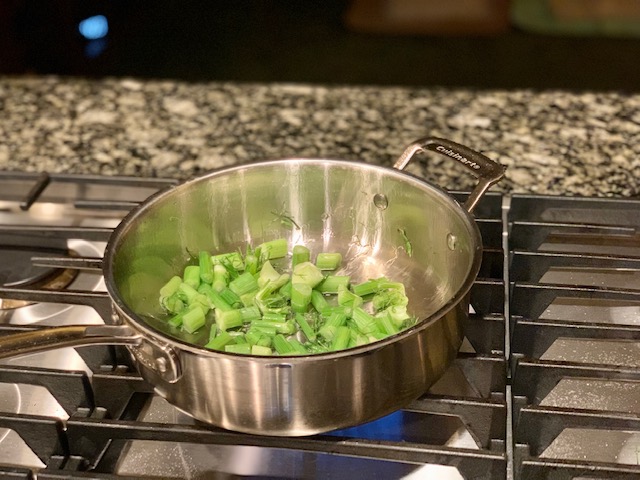
- Sauté the fennel tops in a teaspoon of oil and a 1/2 teaspoon of salt until softened, 3 minutes
- Add the 4 cups of chicken stock and simmer on medium low heat for 5 minutes
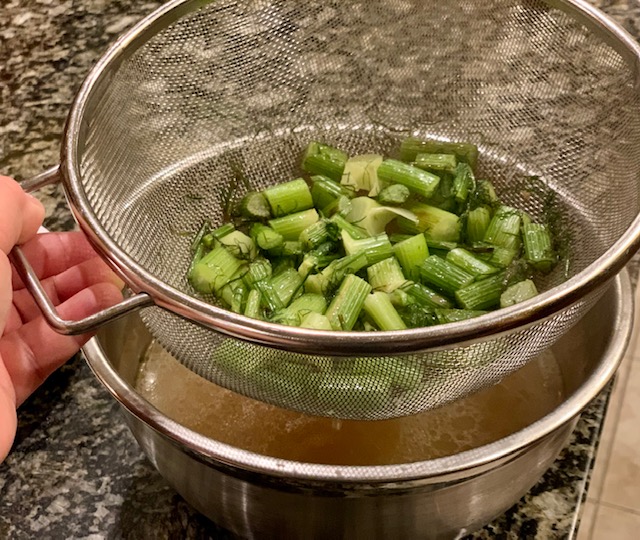
3. Strain the broth with a colander
4. Set aside.
Extra Credit #2: Roasted Fennel Garnish
- Toss extra credit sliced fennel bulbs in 1 tablespoon of oil, and 1 teaspoon of salt
- Place them on a baking pan and roast them in the 375 degree oven (with the squash for efficiency) until softened, 15-20 minutes
- Remove from oven
- Set aside.
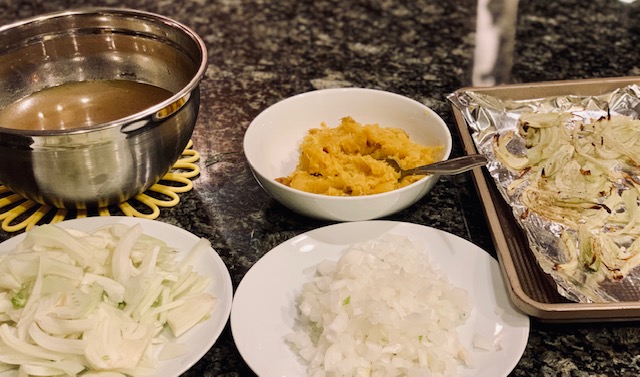
Risotto in the Pressure Cooker
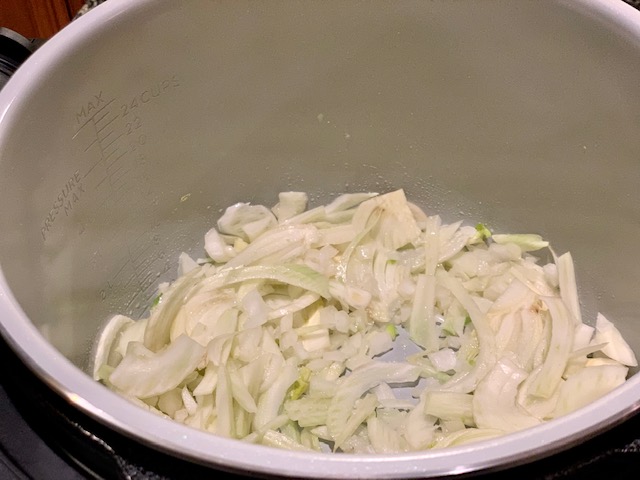
- Turn the pressure cooker to the Sauté function. If you do not have a Sauté function, complete these steps however your cooker can sauté ingredients
- Once the pot comes to temperature, melt the olive oil and butter in the pot
- Saute the fennel and onion by stirring until they start to sweat and soften. Try not to brown, 3-5 minutes
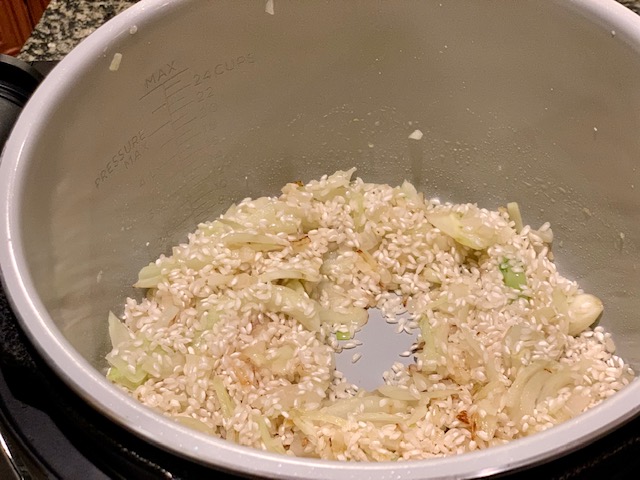
4. Add the Aborio rice and stir, coating the rice with the fat, 1 minute longer
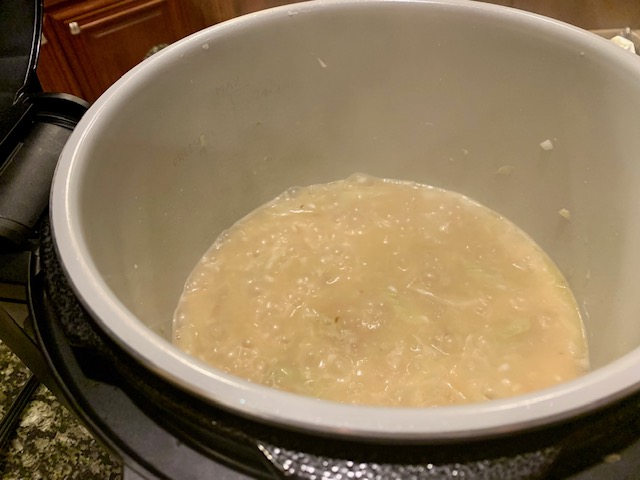
5. Add 3 1/2 cups of the broth and continue cooking until 1/2 of the broth is absorbed by the rice, 2 minutes
6. Place and close pressure cooker lid, and set on high pressure for 10 minutes
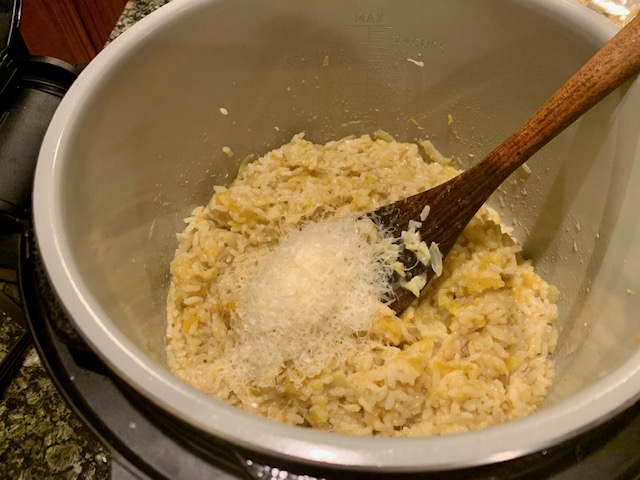
7. Once time has elapsed and cooking is completed, quick release the pressure from the vent
8. Carefully open the lid, turn back to the Saute function, add the squash, the remaining broth, then the cheese until integrated.
9. Add more broth and heat for 1 minute for a more soupy risotto.
Plating
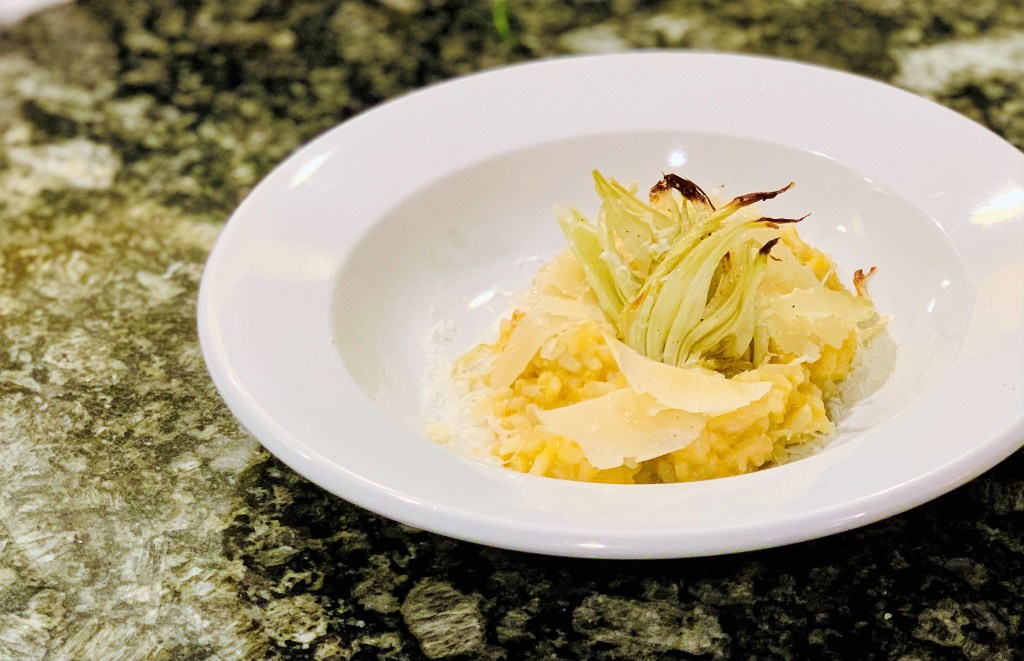
- Spoon risotto onto a plate
- Add extra credit roasted fennel for garnish
- Shave slices of parmesan with a vegetable peeler
- Add some chopped flat-leaf Italian parsley if you’re feeling fancy
- Serve warm.
Extra, extra credit: Eat a tangerine or drink a cold glass of orange juice for dessert!
 Delicious, Deconstructed